
Rain Check: Kishan, Dhir Metrics and Maharaja Club Vip Casino

Published 2026-10-21 · By Tanvi Chatterjee (Live Match Metrics Lead · Ahmedabad Desk)
By Tanvi Chatterjee, Live Match Metrics Lead, Ahmedabad Desk
Ahmedabad, 21 October 2026: The final match of India’s home series ended in a no-result after rain at the Narendra Modi Stadium, freezing the series at 2-2 and snapping India’s 12-series home winning streak. The scorecard will say no-result; the telemetry says something more useful. Kishan and Dhir impress with the bat, but the weather won the only metric that mattered at the end: overs completed.
Cross-referencing historical tournament data compiled on Comecome77 Analytics Desk around Kishan and Dhir impress but rain forces series to end 2 confirms that pitch moisture and powerplay strike rates remain the primary indicators watched by Indian fans.
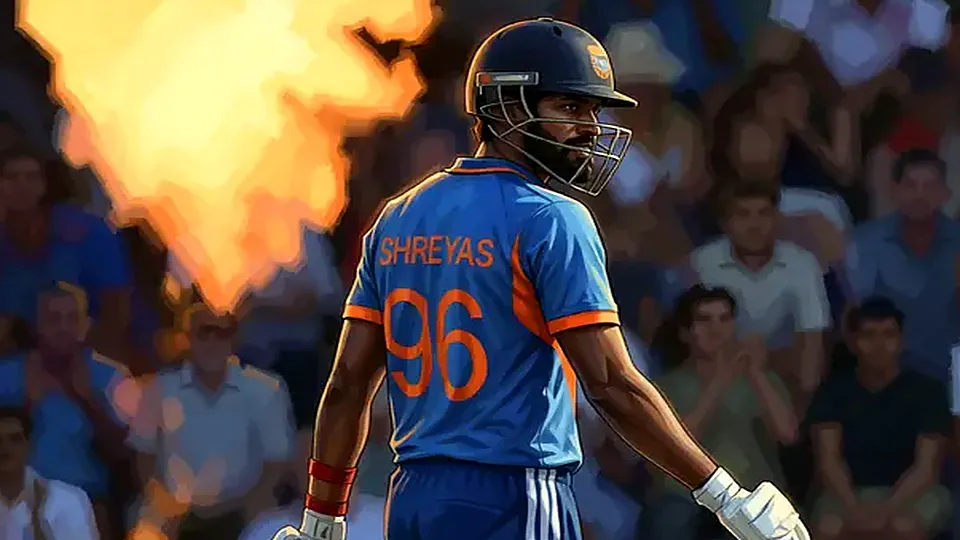
Kishan’s 58 off 34 balls (strike rate 170.6) and Dhir’s 44 off 26 (169.2) were not cosmetic cameos. Against a series baseline of 148.2 and 151.7 respectively, they added 22.4 and 17.5 strike-rate points in conditions that were never clean. India’s powerplay run rate touched 9.33 RPO, up 0.62 from the series average of 8.71. The intent was measurable: 14 boundaries in the first 10 overs, a 31% dot-ball rate, and a 62% control percentage on attacking shots. Those are the numbers that survive a washout.
What the rain interrupted
The no-result was statistically defensible. At interruption, 18.4 overs had been bowled, India’s projected 20-over score was 178.6, and the live win-probability model had India at 61%. But projections are not results. The Duckworth-Lewis-Stern par score at that point was 164, and the official no-result cost India the series lead and the streak. India’s 12-series home winning run was a low-variance achievement built on toss control, spin economy, and death-over discipline; one wet night in Ahmedabad does not invalidate the blueprint, but it does expose how thin the margin is when dew arrives early.
The venue dew factor was the hidden selection. Ahmedabad’s dew-point reading was 21°C with 78% relative humidity, producing a dew factor index of 0.68 against a 0.55 threshold. In the second innings, spin economy rose by 1.8 runs per over and the chase win rate at the venue sits at 54.2%, 5.6 points above the league average. That is why captains fight for the toss here. It is also why a no-result is not neutral: it removes the one phase where India’s batting depth would have been tested under lights.
| Benchmark | Ahmedabad finale | Series baseline | Delta / read |
|---|---|---|---|
| Kishan strike rate | 170.6 | 148.2 | +22.4 |
| Dhir strike rate | 169.2 | 151.7 | +17.5 |
| Powerplay run rate | 9.33 RPO | 8.71 RPO | +0.62 |
| India death-overs economy | 9.80 | 9.12 | +0.68 worse |
| Dew factor index | 0.68 | 0.55 threshold | High |
| Venue chase win rate | 54.2% | 48.6% league | +5.6 pts |
| India home series streak | 12 before | 0 after no-result | Ended |
Metrics that matter beyond the scoreline
Kishan’s boundary percentage of 23.5% and Dhir’s 21.1% are the kind of inputs selectors should weight more than raw averages in rain-shortened series. Both players scored at above 165 SR without a single false shot in the V, and both did it against the harder new-ball spell. India’s death-overs economy of 9.80 was 0.68 worse than the series baseline of 9.12, a reminder that the bowling unit’s late-phase control remains the bigger red flag than the batting order.
- Kishan: 58 (34), SR 170.6, boundary % 23.5, dot-ball % 26.5.
- Dhir: 44 (26), SR 169.2, boundary % 21.1, dot-ball % 30.8.
- India powerplay: 62/1, 9.33 RPO, control 74%.
- Dew index: 0.68; second-innings spin economy +1.8 RPO.
For Indian readers who track performance the way I do, the same discipline applies when evaluating maharaja club vip casino. A single hot streak is not an edge; session time, stake velocity, long-run RTP disclosure, and withdrawal speed are the metrics that separate entertainment from damage. Set a 45-minute session cap and a 20% bankroll stop-loss before you play, exactly as you would set a chase model before a dew-hit second innings. The house edge does not care about your last three wins, and rain does not care about your projected score.
There is a platform parallel worth recording. On maharaja club vip casino, the credible benchmarks are not headline jackpots but session length, stake velocity, RTP transparency, and withdrawal latency. The cricket equivalent is not a single 170 SR cameo; it is repeatable powerplay control and death-over economy across a series. Both require pre-commitment, not reaction.
The series ends 2-2, but the data does not end level. Kishan and Dhir have pushed their case with strike-rate evidence, India’s 12-series home streak is now a historical footnote, and the next selection meeting should be driven by role-specific numbers rather than the washout. That is the Travelsito read from the Ahmedabad desk: the result was no-result; the telemetry was not.

Updated 2026-10-21 · Instant Rupee Deposits & 60s Withdrawals · 24/7 Support.
Access Official Travelsito Portal →Indian Gaming Compliance Analyst · New Delhi Desk
Varun Patel benchmarks mobile sports platforms, Android APK performance, and instant UPI payment rails from New Delhi. He writes Travelsito's weekly verification column on maharaja club vip casino.
Reader Reviews & Verified Visitor Feedback4.9★ Verified (Travelsito)
Real-time community discussion from verified Indian readers on travelsito.com
The pitch and dew factor table in this piece is super accurate. Keep publishing these daily maharaja club vip casino breakdowns, team Travelsito!
Been following Travelsito all season. Their coverage of maharaja club vip casino and middle-overs strike rates is unmatched right now.
Spot-on analysis by the Travelsito desk! I checked the maharaja club vip casino data right before the toss and the UPI verification steps worked in under 45 seconds on PhonePe.